
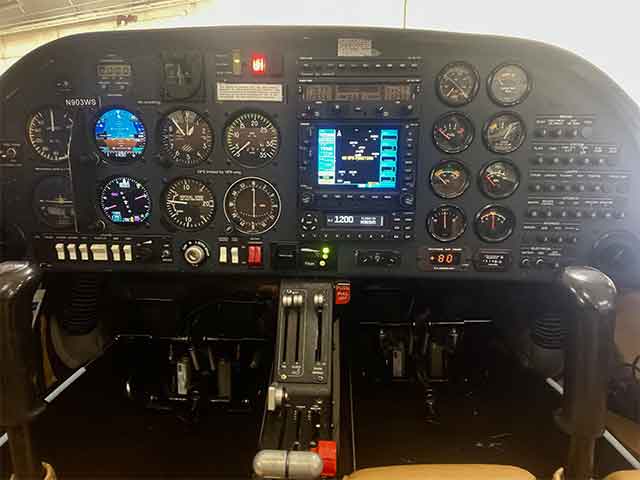
Aircraft electrical systems may not be the first thing a student pilot thinks about while flying around Miamisburg, but understanding what powers the radios, lights, instruments, starter, and other equipment is an essential part of becoming a knowledgeable private pilot. A charging-system problem can quickly turn from a panel indication into a workload and decision-making problem.
Quick answer: Most light general aviation airplanes use a battery together with an engine-driven alternator or generator to supply electrical power. Pilots should understand the battery, alternator or generator, master switch, bus system, circuit protection, and electrical indications in the aircraft they fly. Just as important, pilots need to recognize signs of an electrical failure and follow the aircraft’s approved checklist and Pilot’s Operating Handbook.
What local pilots should know
-
The battery provides electrical power for starting and can provide limited electrical power if the alternator or generator stops supplying electricity.
-
Dayton-Wright Brothers Airport in Miamisburg serves general aviation activity in southern Montgomery County, making aircraft systems knowledge especially relevant to pilots training and flying locally.
-
Radios, transponders, lights, fuel gauges, pitot heat, and other equipment may rely on the aircraft’s electrical system, depending on the airplane.
-
Pilots flying between communities such as Springboro, Centerville, Moraine, and the greater Dayton area should know which equipment remains available after an electrical malfunction.
-
Procedures differ between aircraft, so memory items and troubleshooting habits should never replace the approved checklist or AFM/POH.
Why Aircraft Electrical Systems Matter to Pilots in Miamisburg
Aircraft electrical systems matter to pilots in Miamisburg because electrical power supports equipment that can directly affect communication, navigation, visibility, and cockpit workload. A pilot who understands what the electrical indications are saying is better prepared to identify an abnormal condition early and make sound decisions before available battery power becomes limited.
The FAA identifies the alternator or generator, battery, master switch, bus bars, circuit breakers or fuses, voltage regulator, wiring, and monitoring instruments among the major components of a basic aircraft electrical system.
For pilots operating from Dayton-Wright Brothers Airport and around southern Montgomery County, that knowledge should become part of normal aircraft familiarization rather than something learned only for a written test.
At First Flight Aviation, we believe systems knowledge should connect directly to the decisions a pilot may need to make in the cockpit. Understanding what a component does is useful. Understanding what its failure means to the flight is even more valuable.
The Basic Parts of a General Aviation Electrical System
A basic general aviation electrical system normally includes a battery, alternator or generator, voltage regulator, electrical buses, switches, wiring, circuit protection, and cockpit indications. The exact arrangement varies by aircraft, which is why pilots should study the electrical-system diagram and limitations for the specific airplane they operate.
Battery
The battery supplies stored electrical energy. It is commonly used during engine starting and can provide a limited source of electricity if the alternator or generator fails.
That backup capability should not be mistaken for unlimited endurance. Once an aircraft is operating only on battery power, the remaining time depends on the battery’s condition, electrical load, aircraft design, and other factors.
Alternator or generator
The engine-driven alternator or generator normally supplies electricity while the engine is operating and maintains the battery’s charge.
The FAA notes that alternators generally provide useful electrical output across a wider range of engine speeds than traditional DC generators.
Electrical buses
A bus bar provides a common distribution point for electrical power. Different aircraft may have main, avionics, essential, or other buses depending on their design.
For a private pilot, the practical question is simple: Which equipment is powered by which part of the system?
Knowing that answer can make abnormal-procedure checklists much easier to understand.
How Pilots Monitor the Electrical System
Pilots monitor an aircraft electrical system through instruments and warning indications such as ammeters, loadmeters, voltmeters, and low-voltage annunciations, depending on the airplane. A pilot should know what a normal indication looks like before attempting to recognize an abnormal one.
An ammeter may show whether the battery is charging or discharging. A loadmeter can indicate how much of the alternator or generator’s capacity is being used. Some aircraft instead provide warning lights or other electronic indications.
The FAA specifically advises pilots to consult the AFM/POH when abnormal charging indications occur.
During flight training in the Miamisburg area, checking electrical indications should become part of deliberate cockpit awareness rather than an occasional glance.
Warning Signs of a Possible Electrical Problem
Common warning signs of an aircraft electrical problem include abnormal voltage or amperage indications, a low-voltage warning, malfunctioning equipment, dimming lights, or repeated electrical interruptions. Any abnormal indication deserves attention because multiple cockpit systems can depend on the same electrical source.
Watch for:
-
A low-voltage or alternator warning light
-
An ammeter showing an unexpected discharge
-
A voltmeter reading outside the aircraft’s normal range
-
Radios or avionics behaving unexpectedly
-
Interior or exterior lights becoming unusually dim
-
Electrical equipment cycling off or resetting
-
A circuit breaker opening
-
Several electrical components failing at approximately the same time
One malfunctioning device does not automatically mean the entire charging system has failed. The aircraft checklist helps pilots distinguish between problems without relying on guesswork.
What Should a Pilot Do After an Alternator Failure?
After a suspected alternator failure, a pilot should recognize the condition, follow the aircraft’s approved abnormal or emergency checklist, reduce electrical demand when directed, and evaluate the safest way to complete or terminate the flight. Procedures vary between aircraft, so pilots should not substitute a generic sequence for the airplane manufacturer’s instructions.
If the alternator is no longer supplying power, the battery may become the remaining electrical source. The FAA notes that with the alternator disconnected, electrical loads are placed on the battery and nonessential equipment should be turned off to conserve battery power.
For pilots flying near Miamisburg, Dayton, Springboro, or Centerville, recognizing the problem early gives the pilot more options than discovering it after significant battery depletion.
Circuit Breakers Are Protection Devices, Not Troubleshooting Buttons
Aircraft circuit breakers protect wiring and equipment from electrical overload, so pilots should treat a popped breaker as evidence of a possible problem rather than repeatedly resetting it. The airplane’s approved procedures should determine whether a reset is appropriate and what action should follow if the breaker opens again.
A circuit breaker performs a protective function similar to a fuse. When excessive current occurs, it can interrupt that circuit before additional damage develops.
Repeatedly forcing a malfunctioning circuit back online can defeat the purpose of that protection.
For student and private pilots, a good habit is to know the location of important breakers before departure rather than attempting to interpret the panel for the first time during an abnormal situation.
Common Causes of Electrical-System Problems
Aircraft electrical problems can result from charging-system faults, battery problems, wiring or connection issues, failed components, or excessive electrical loads. Pilots are not expected to diagnose and repair these problems in flight, but understanding the possibilities helps them interpret cockpit indications and communicate clearly after landing.
Common categories include:
-
Alternator or generator problems: Loss of charging capability can leave the aircraft dependent on stored battery energy.
-
Battery issues: Battery condition affects starting performance and available backup electrical energy.
-
Circuit or equipment faults: One defective component may cause its protective fuse or circuit breaker to open.
-
Connection or wiring problems: Electrical faults can produce intermittent or complete equipment failures.
-
Unusual electrical demand: Pilots should understand the electrical loads associated with installed equipment.
Seasonal temperature swings in southwest Ohio also make thorough preflight observation worthwhile, particularly when an aircraft has been sitting outside or has not flown recently.
Electrical-System Knowledge Before Every Flight
Good electrical-system preparation means knowing the normal indications, checking electrical equipment during preflight and run-up as appropriate, and reviewing the airplane’s abnormal procedures before they are needed. Pilots flying from Miamisburg should treat system knowledge as part of aircraft familiarization, especially when transitioning into a different make, model, or avionics configuration.
Useful preparation includes checking:
-
Normal voltage or amperage indications
-
Location of the master and alternator controls
-
Relevant annunciator lights
-
Circuit breaker or fuse locations
-
Which equipment is electrically powered
-
The airplane’s electrical-failure checklist
-
The electrical-system diagram in the POH
-
Which instruments remain usable if electrical power is lost
The objective is not to become an aircraft mechanic. It is to become a pilot who understands what the airplane is telling them.
Common Mistakes Private Pilots Should Avoid
The most common electrical-system mistakes come from memorizing generic information instead of learning the specific aircraft, overlooking early warning indications, or improvising during a malfunction. Better preparation gives pilots around Montgomery County a clearer framework for responding when electrical equipment does not behave normally.
Mistake: Assuming every airplane’s electrical system works exactly the same way.
Consequence: The pilot may expect the wrong indications or use an inappropriate procedure.
Better approach: Study the electrical section of the POH for the airplane being flown.
Mistake: Ignoring a small charging or voltage abnormality.
Consequence: A manageable problem may become more complicated as battery energy is consumed.
Better approach: Investigate abnormal indications using the approved checklist.
Mistake: Resetting a circuit breaker repeatedly.
Consequence: The protective device may be responding to a genuine electrical fault.
Better approach: Follow the aircraft manufacturer’s procedure.
Mistake: Waiting until an emergency to locate electrical controls.
Consequence: Cockpit workload increases when time and attention are already limited.
Better approach: Learn important switches, breakers, indications, and checklist locations before departure.
A Common Local Training Scenario
A common Miamisburg training scenario involves a pilot noticing an abnormal charging indication while operating near Dayton-Wright Brothers Airport and having to decide what the indication means before the situation becomes urgent. This is not a specific case study, but it illustrates why systems knowledge belongs in practical flight preparation.
Instead of immediately guessing at the cause, the pilot identifies the indication, confirms it using the aircraft checklist, considers which electrical equipment is essential, and evaluates nearby landing options.
That decision-making process is the real value of studying aircraft systems.
Flight Training and Aircraft Systems Education
Flight training is where aircraft electrical knowledge becomes practical because pilots can connect diagrams and textbook concepts with the switches, indications, checklists, and equipment inside the airplane they actually fly. Reviewing those relationships with an instructor can help transform memorized facts into usable cockpit knowledge.
Pilots should be able to explain not just what a battery or alternator does, but what they would expect to see if that component stopped performing normally.
Studying the POH vs. Memorizing Generic Aircraft Systems
The best approach is to understand general electrical principles and then apply them to the exact airplane through its Pilot’s Operating Handbook or approved flight manual. Generic knowledge provides the foundation, while aircraft-specific documentation identifies the indications, limitations, equipment, and procedures that actually apply to your flight.
A diagram from one training airplane should not automatically be applied to another.
That becomes especially important as pilots progress into airplanes with different avionics, electrical buses, warning systems, or equipment configurations.
Service Areas
Pilots seeking aviation education in the Miamisburg area can encounter a wide range of general aviation activity throughout southern Montgomery County and nearby communities. Dayton-Wright Brothers Airport is located in Miamisburg and serves the surrounding area, including communities such as Springboro, Centerville, Moraine, and the broader Dayton region.
The Cost of Ignoring Electrical-System Knowledge
Ignoring aircraft electrical-system knowledge can increase cockpit workload and reduce the time available for good decisions when something stops working as expected. The problem is not simply losing a radio or light. An electrical malfunction may affect several systems, and a pilot needs to understand what remains available and what action the aircraft manufacturer recommends.
Pilots do not need to troubleshoot wiring in flight. They do need to recognize abnormal indications and respond deliberately.
Frequently Asked Questions About Aircraft Electrical Systems
What electrical-system knowledge should a private pilot in Miamisburg have?
A private pilot should understand the aircraft’s battery, alternator or generator, buses, circuit protection, switches, electrical indications, and abnormal procedures. Pilots should also know which installed systems require electrical power and review the exact POH for the aircraft they fly rather than relying solely on generalized training material.
Does an airplane stop flying if the alternator fails?
No, an alternator failure does not normally cause the airplane itself to stop flying because aerodynamic flight and engine operation are separate from many electrical functions in typical training aircraft. However, electrically powered equipment may eventually become unavailable as battery power is depleted, so the aircraft-specific checklist and sound decision-making are critical.
How long will an aircraft battery last after an alternator failure?
There is no universal battery-endurance number a Miamisburg pilot should assume after an alternator failure. Remaining electrical time depends on battery condition, battery capacity, electrical load, aircraft configuration, and other factors. Pilots should follow the POH, reduce loads when directed, and avoid planning around an unsupported time estimate.
Are magnetos dependent on the aircraft battery?
Traditional aircraft magneto ignition systems are designed to generate ignition energy independently of the airplane’s main electrical system, although aircraft configurations vary. That distinction helps explain why some piston aircraft engines can continue running after a main electrical-system failure. Pilots should still study their specific aircraft rather than generalizing the concept to every engine or ignition system.
Should I reset a popped circuit breaker during a flight near Dayton?
A pilot should reset a popped circuit breaker only when doing so is consistent with the aircraft’s approved procedures and applicable guidance. A breaker opens to protect a circuit from excessive current. Repeated resetting can be inappropriate when an underlying electrical fault remains, so a popped breaker should never be treated casually.
Why should student pilots at Dayton-Wright Brothers Airport study electrical diagrams?
Electrical diagrams help student pilots understand how power moves from its source to cockpit equipment and which components share a bus or protective device. For pilots training around Dayton-Wright Brothers Airport, that understanding can make abnormal indications easier to interpret and can strengthen the systems knowledge expected as training progresses.
Is the alternator the same thing as the battery?
No, the alternator and battery perform different jobs. The alternator normally produces electrical power while the engine is running and helps maintain the battery’s charge. The battery stores electrical energy, supplies power during starting, and may temporarily power electrical equipment if the normal generating system becomes unavailable.
Where should Miamisburg pilots get aircraft-specific electrical information?
Miamisburg pilots should use the approved Pilot’s Operating Handbook or Aircraft Flight Manual for the specific airplane they are flying. FAA handbooks are useful for understanding general aircraft-system principles, but cockpit indications, limitations, electrical architecture, and abnormal procedures can vary between aircraft and should be learned from the appropriate aircraft documentation.
Build Aircraft Systems Knowledge That Works in the Cockpit
Knowing how an aircraft’s electrical system works helps turn an unexpected warning light or abnormal gauge indication into a problem a pilot can recognize and manage methodically. For pilots training in Miamisburg and throughout the Dayton area, that practical understanding is part of developing stronger aircraft knowledge and better aeronautical decision-making.
Become a More Prepared Pilot in Miamisburg
Build your aircraft-systems knowledge with training that connects ground-school concepts to real cockpit decisions.